Research-based Art Project 2024
Stained Glass, lead, steel, stone, book
The Story of Kuling
Situated in the valley of Mount Lu, China, Kuling was founded in 1895 by English missionary Edward Selby Little. Initially established as a sanatorium and rest resort for Westerners residing in China, it evolved into a unique colonial enclave. Little, adopting the name Li Deli (李德立), navigated local bureaucracy and, after a decade-long struggle, took out a 999-year lease for the land atop Mount Lu. The missionaries distributed the land to various European countries and the USA, leading to the construction of houses in Western architectural styles, built with local materials. Little named the area “Kuling,” a play on the word “cooling,” which resonated locally and sounds naturally in Chinese. The Kuling Council, run by missionaries, managed land plots and used proceeds to fund local services and security.
Based on my research into the hidden history of Kuling, I question how we perceive history and how I, as an artist, can intervene in it.
Ultimately, how can we break free from the linear perception of time?
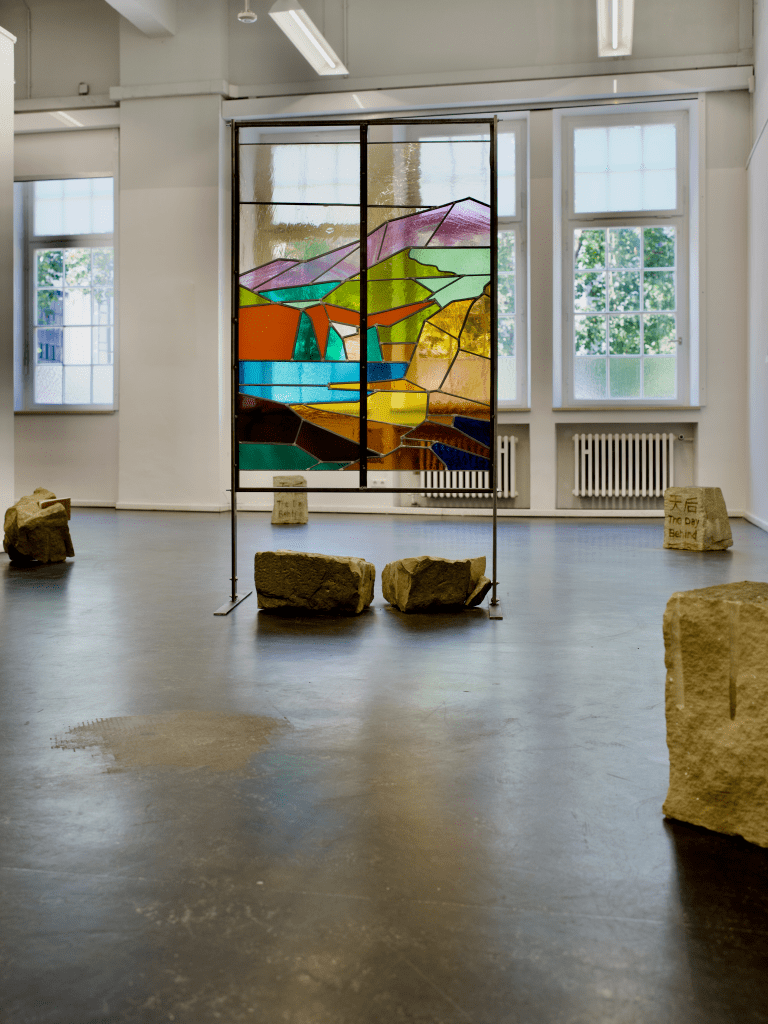
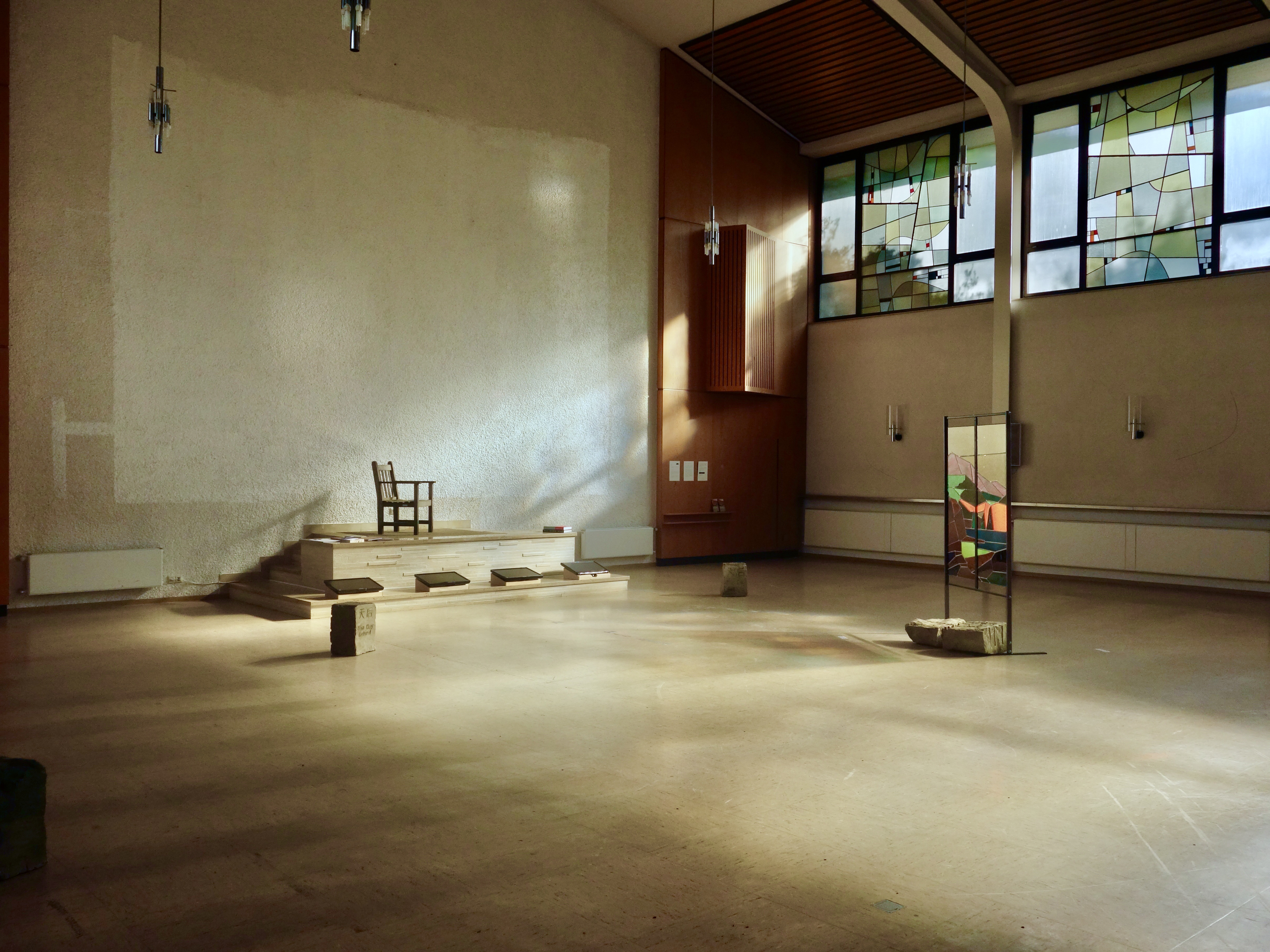
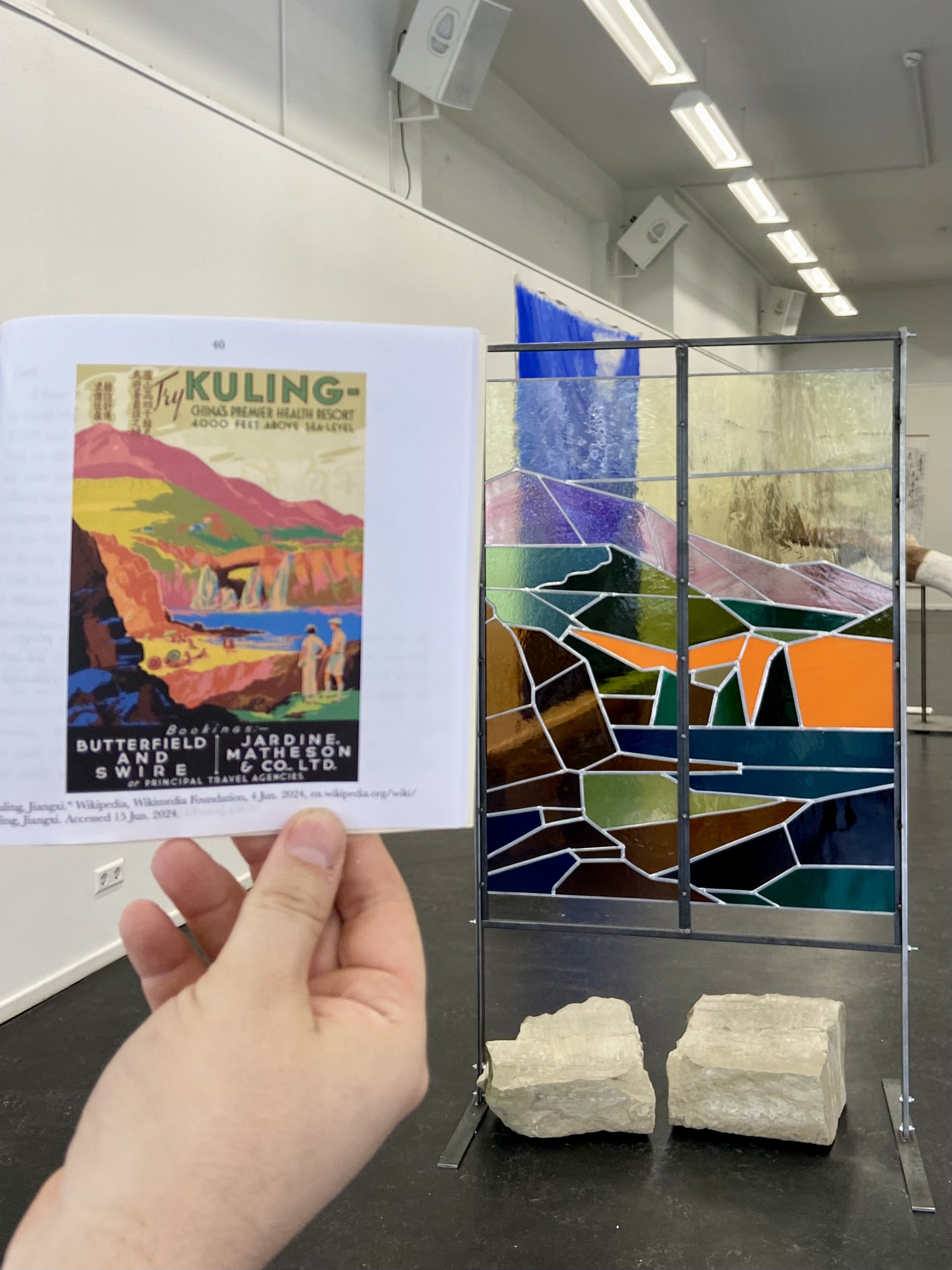
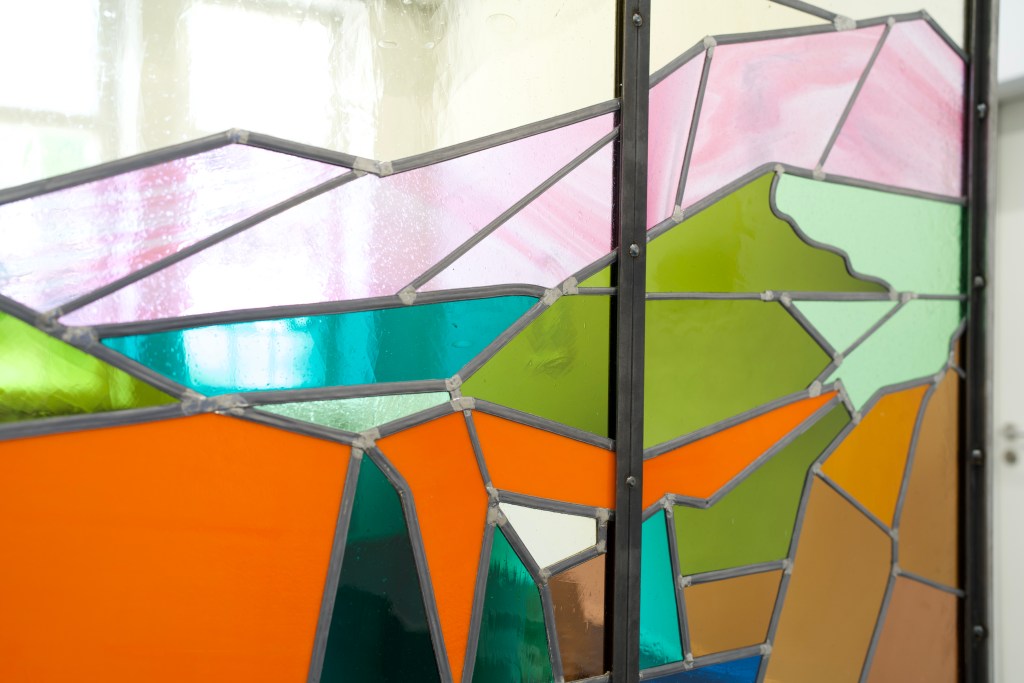
I reimagine Edward Little’s vision of Kuling’s landscape through stained glass. In doing so, I gain the power to represent both the landscape of Kuling and the narrative behind it.
The perception of time can be observed in language. In modern English, the grammar has very clear line-based time tenses. Past, present, and future are arranged in a line. This limits our imagination to think about time. It might not function as a single linear form but something way more complicated. In Chinese, however, this linear form is not that clear and absolute.
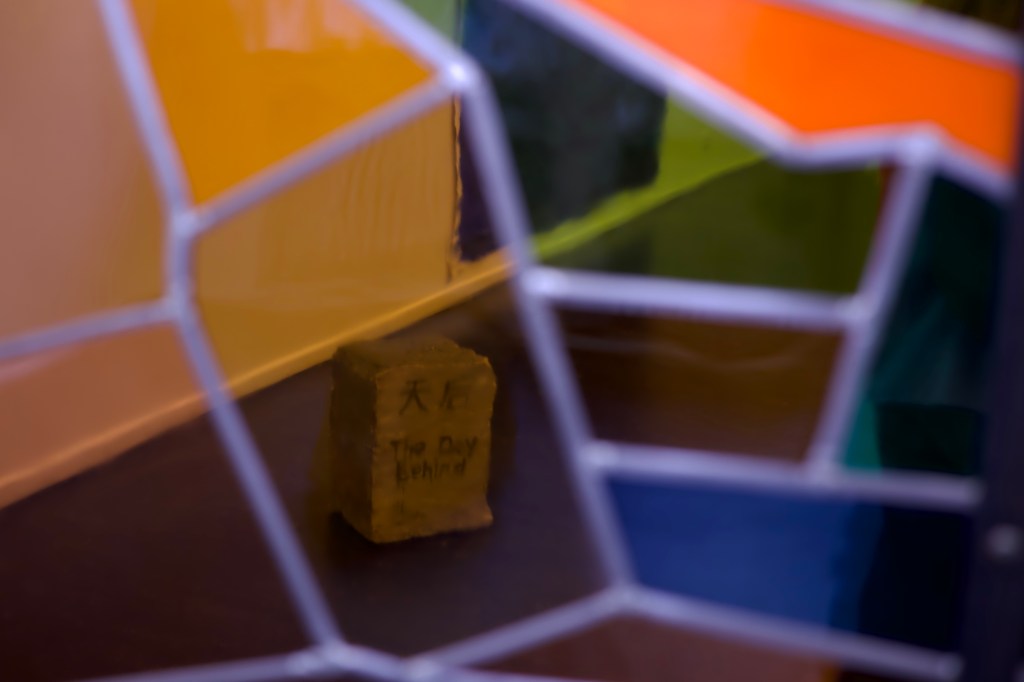
Namely, in the Chinese language, people borrow the words that describe space to describe time. The day before yesterday, 前天, for example, in Chinese, is called the day in front. The day after tomorrow, 后天, is called the day behind us. Using this perception, e.g. Paul Klee’s Angel of History, places the viewer in a time-space, facing the past, leaving the future behind. The past is no chronologically presented matter but an assemblage of the wreckage.
Boundary Stones
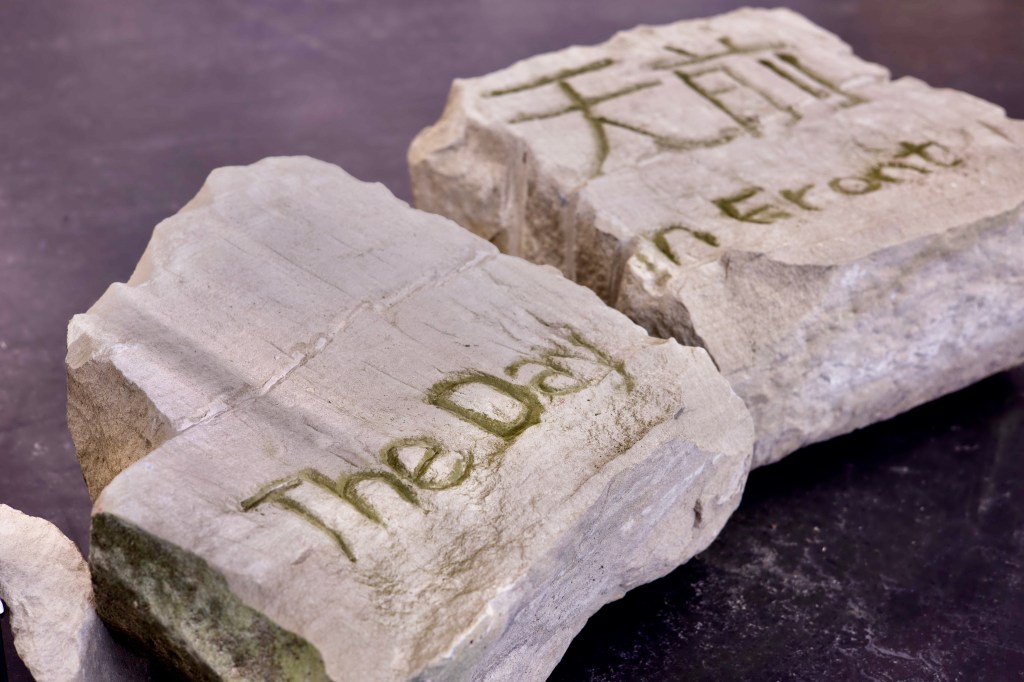
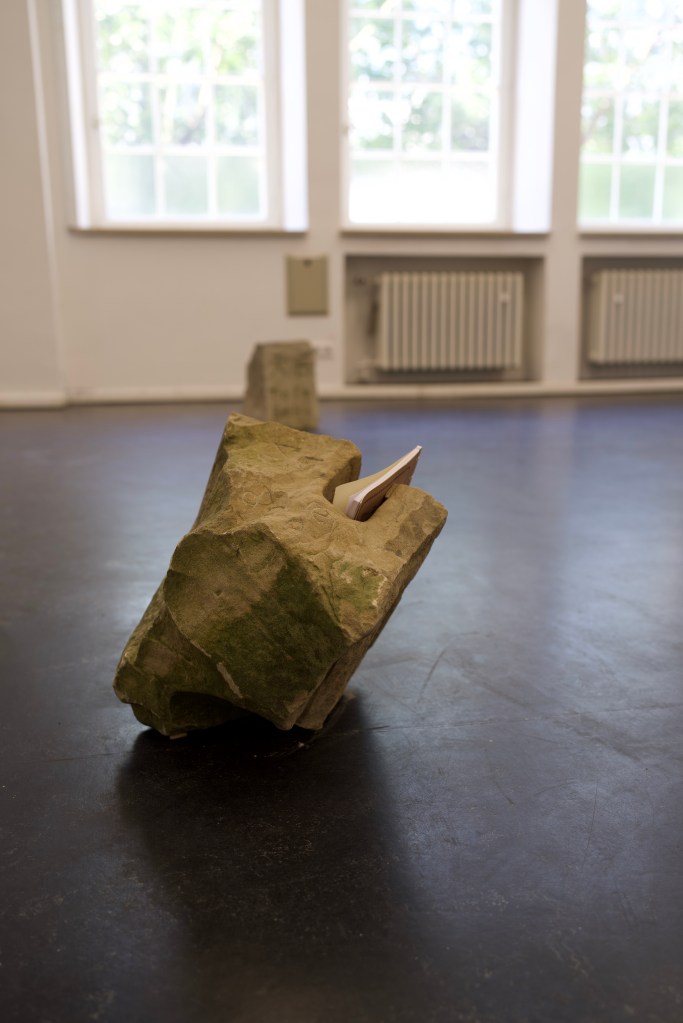
I constructed a time field using boundary markers made of sandstone. At the center, the past zone, represented by stained glass and a stone. Inscribed are the words “前天 The Day In Front.” Surrounding the past zone is the present zone, marked by four boundary stones, engraved with “后天 The Day Behind.” Beyond these markers lies the future field.

The Book Without an End
Edward Selby Little published The Story of Kuling in 1899 to share his experiences and the story of how he acquired the land deed and constructed the Kuling resort.
I have preserved his original narration but also created my own narrative of the Story of Kuling. Additionally, the pictures documenting the process of making the stained glass are positioned parallel to the map of Kuling during different periods.
Readers can follow Edward’s story from left to right. Meanwhile, by reading from right to left—similar to the traditional order of a Chinese book—they can follow my narration. By mixing these two narratives together in the same book, readers can explore both sides of the Kuling story, breaking the linear chronological order in their reading process.
© 2026 Xy June Li. ALL RIGHTS RESERVED.
 Xy June Li